Description
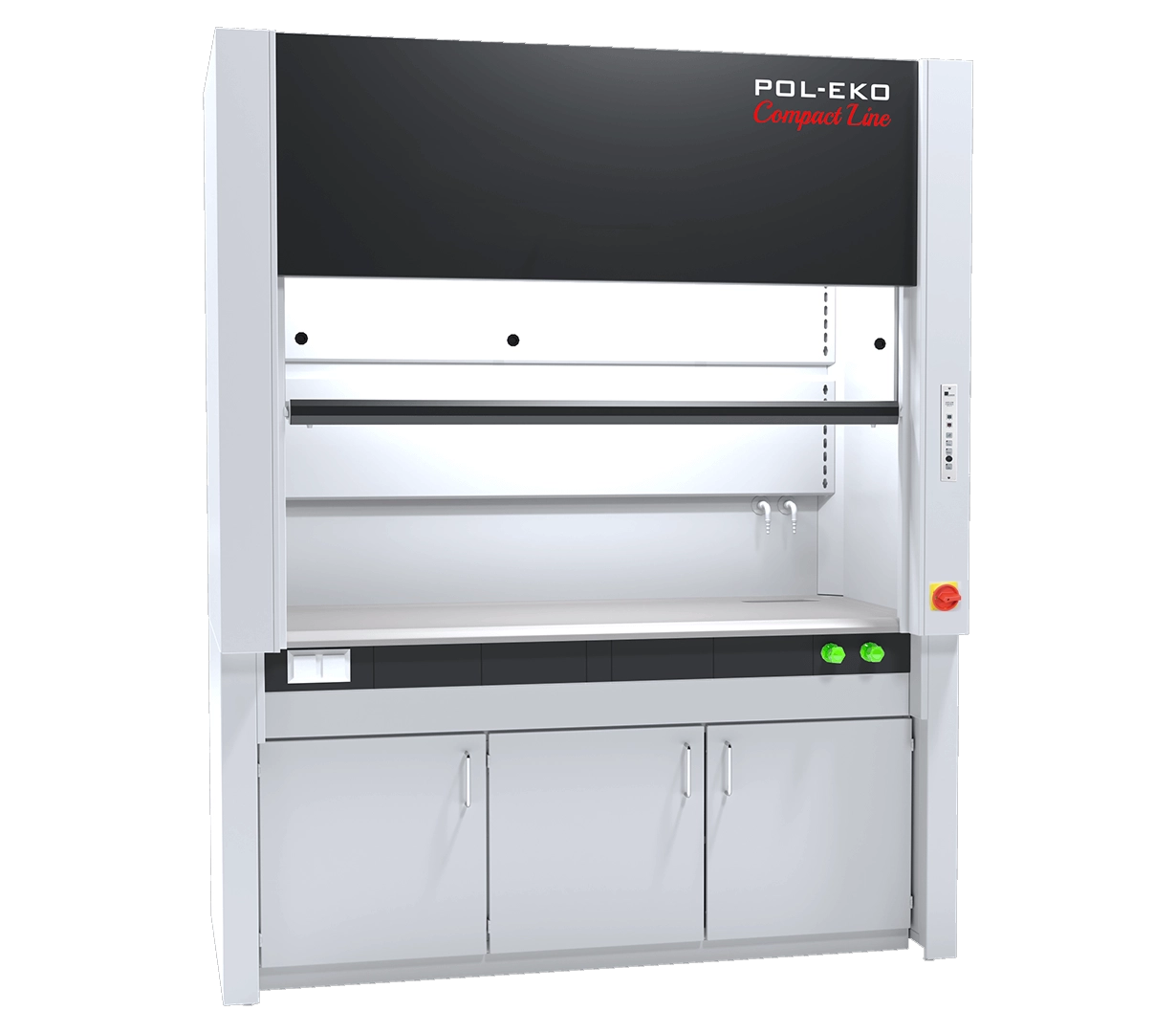
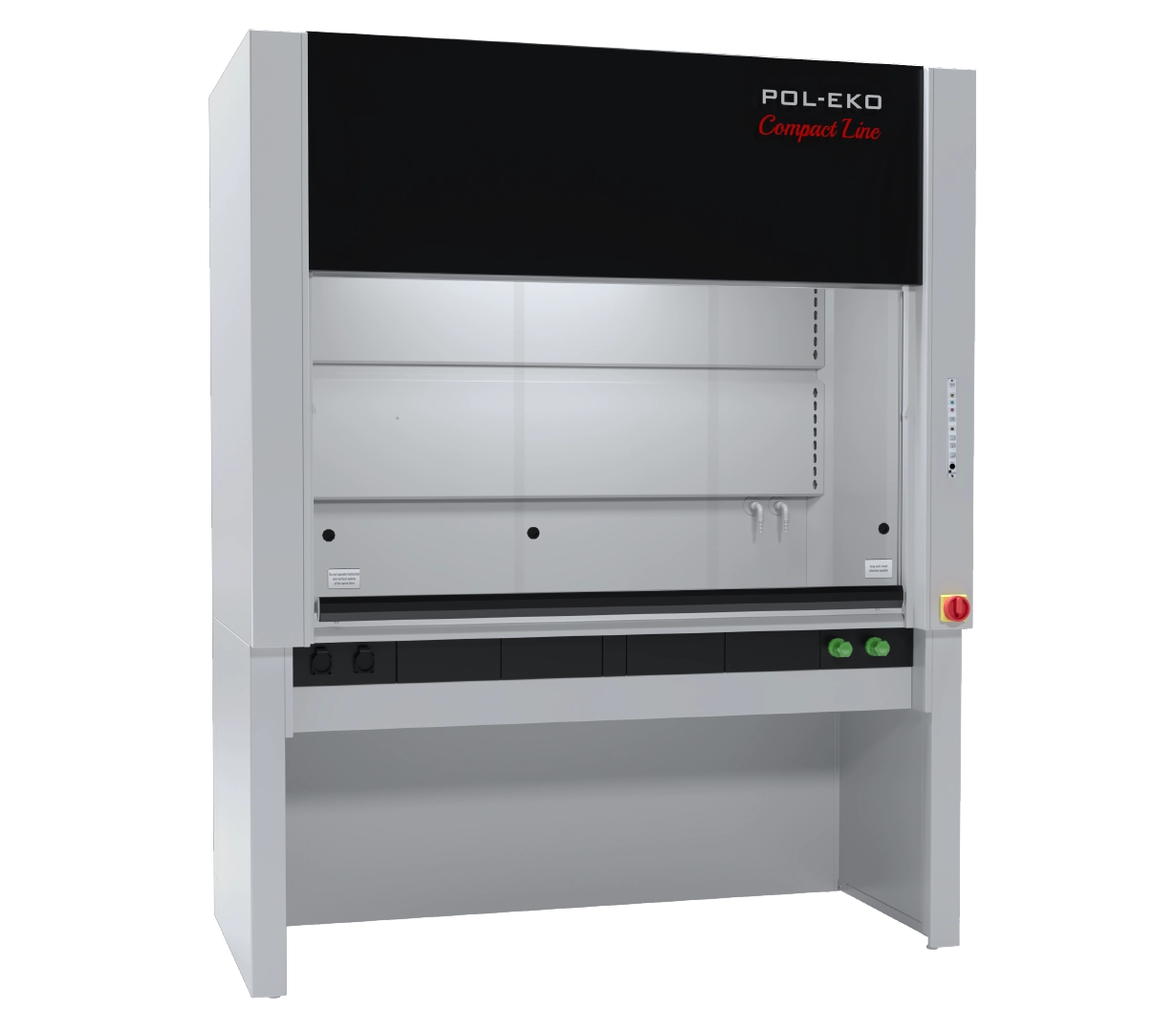
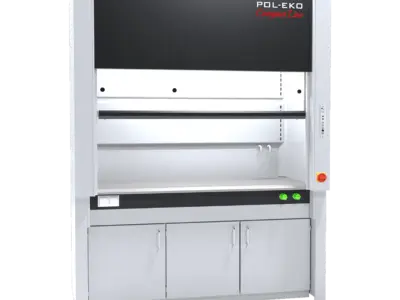
The POL-EKO DCL 1800 HF is the largest specialized hood in the line, designed to provide a safe, massive workspace for handling hydrofluoric acid ($HF$). In analytical and metallurgical labs, $HF$ is essential for mineral digestion but poses a unique risk: it destroys standard tempered glass and attacks most metals. The DCL 1800 HF solves this by replacing all vulnerable components with chemically inert materials.HF-Specific Safety Features:Etch-Resistant Sash: Standard fume hoods use tempered glass which becomes opaque and brittle when exposed to $HF$ vapors. The DCL 1800 HF typically utilizes a transparent polycarbonate sash or a specialized protective film to maintain visibility and structural integrity.1Total Polypropylene (PP) Lining: The internal chamber is fully lined with high-density polypropylene. This non-metallic, non-porous surface ensures that the hood structure is not compromised by acid condensation.Advanced Airflow Monitoring: At 1800 mm wide, maintaining a safe face velocity is critical. The unit features a Schneider monitoring system with audible and visual alarms that warn the user if airflow falls below the safety threshold (2$0.5 text{ m/s}$).3Ergonomics and Integration:Expansive Workspace: The 1740 mm internal width allows for large digestion blocks or automated sample prep systems to be housed safely.Integrated Utilities: The side pillars feature IP44-rated electrical sockets and remote-controlled valves for water and specialized gases. All internal fittings are selected for their resistance to acid corrosion.Aerodynamic Efficiency: The double-back wall system with upper and lower extraction slots ensures that both heavy and light acid vapors are removed without creating turbulence.4Primary Applications:Geochemical Analysis: Large-scale rock and mineral digestion using $HF$ for ICP-MS preparation.Semiconductor Research: Etching of silicon wafers and components.Metallurgy: Specialized cleaning and etching of titanium and other metal alloys.Glass Industry: Controlled etching and cleaning processes.
Specifications
Fume Hood CompactLine DCL 1800 HF Specs
The DCL 1800 HF is the most chemically specialized model in the 1800 mm series, specifically engineered for laboratories working with Hydrofluoric Acid (HF). While standard hoods use ceramic or glass that HF can dissolve, this version replaces those components with Polypropylene (PP) and Polycarbonate to ensure structural integrity and operator safety.
-
Internal Chamber Material: Polypropylene (PP) — high-density, acid-resistant plastic
-
Worktop Material: Polypropylene (PP) with a raised marine edge for spill containment
-
Front Window: Polycarbonate (HF-resistant) or toughened glass with a protective HF-proof foil; manually operated with counterweight (lock at 500 mm, max 810 mm)
-
External Dimensions (W x H x D): 1880 x 2325–2600 x 965 mm
-
Working Space Dimensions (W x H x D): 1750 x 1220 x 750 mm (standard depth; may vary by configuration)
-
Airflow Management: Double back-wall system with PP extraction slots for removing light and heavy vapors without turbulence.
-
Monitoring System: Schneider FM 550-A-0-E controller with air velocity sensor (compliant with EN 14175).
-
Lighting: Energy-saving linear LED lighting, separated from the chamber by a protective pane.
-
Standard Fittings:
-
2 x Water spouts with front-panel valves (Acid-resistant BROEN)
-
1 x Polypropylene sink (Standard size 280 x 80 mm or optional large cup sink)
-
2 x Electrical sockets (230V, 50Hz, IP44)
-
Safety Features: * Decompression safety flap in the ceiling.
-
Recommended Airflow: 900 – 1500 m³/h
-
Exit Air Duct Diameter: Ø 250 mm
-
Nominal Power: 82 W
-
Construction: Galvanized steel frame and external housing with epoxy powder coating; all internal contact surfaces are PP.
Key Application Highlights
-
Hydrofluoric Acid Specialty: This is the only variant in the 1800 series designed to withstand the unique corrosive properties of HF, which “etches” and destroys traditional glass and ceramic surfaces.
-
Metal-Free Interior: The polypropylene lining ensures that there are no metal surfaces exposed within the chamber, preventing rust and contamination in high-purity acid applications.
-
Maximum Size: As the 1800 model, it provides the largest available width (1750 mm internally) for complex acid digestion setups or multiple workstations.