Description
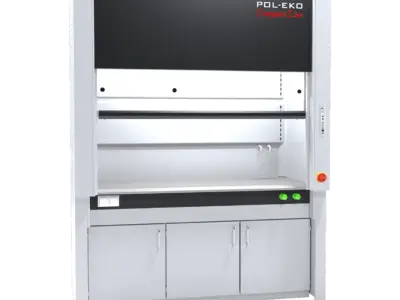
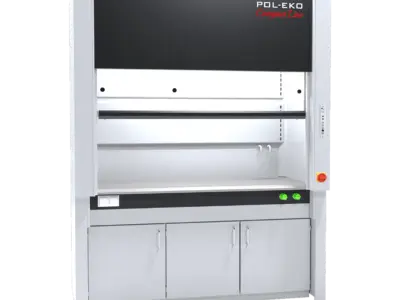
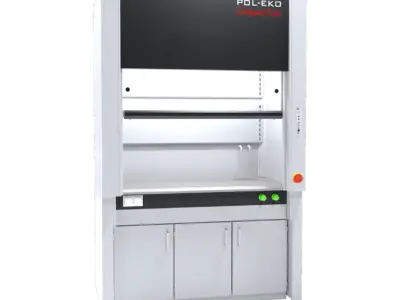
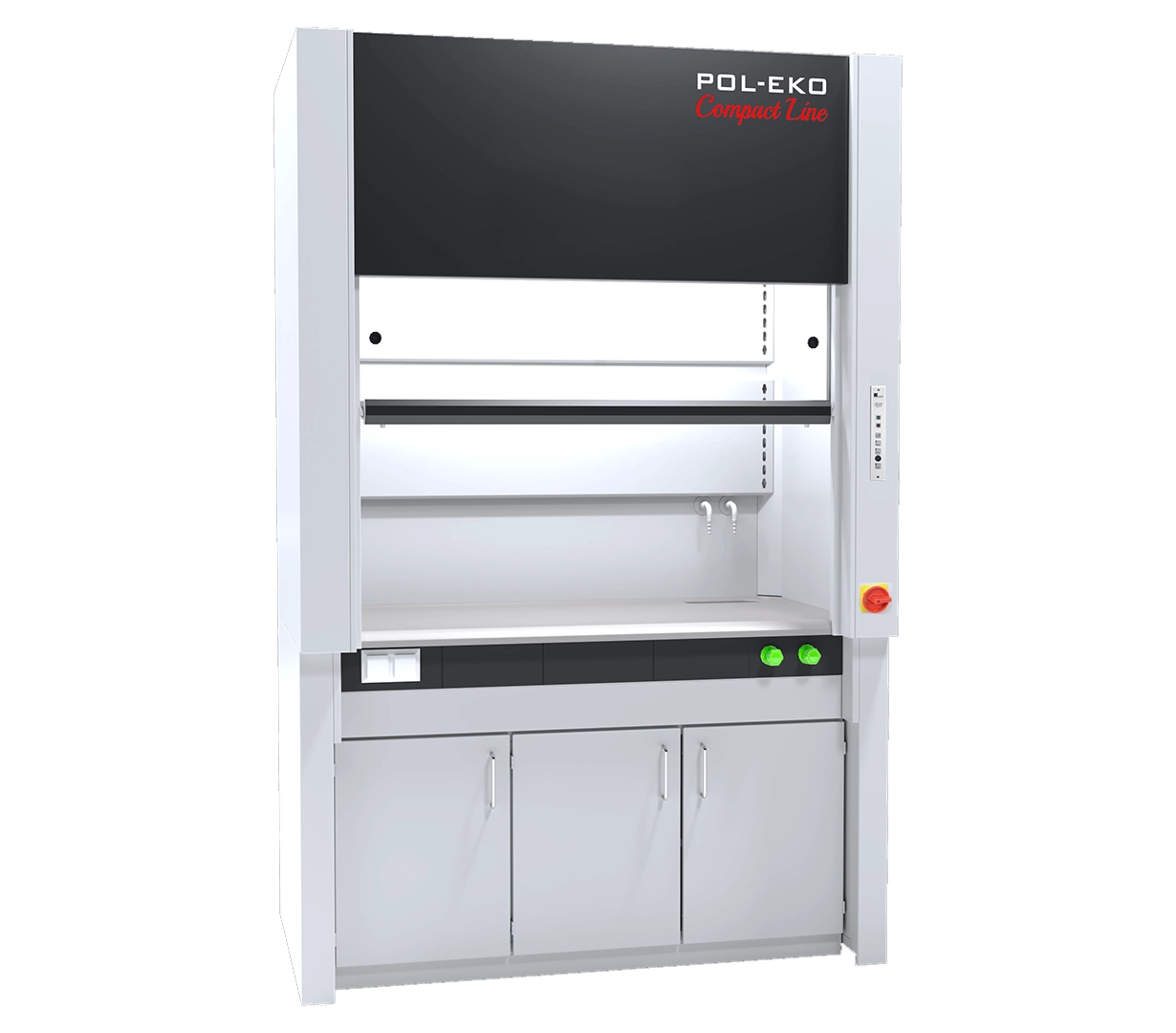
The POL-EKO DCL 1500 PP is the preferred choice for laboratories that require a larger, 150-cm wide workspace without compromising on chemical durability. While standard fume hoods often use epoxy-coated steel, the Polypropylene (PP) build of the DCL 1500 PP ensures that the hood remains structurally sound even when exposed to concentrated acids like Hydrofluoric ($HF$), Hydrochloric ($HCl$), or Nitric ($HNO_{3}$) acid.Safety-First Engineering:The DCL 1500 PP is built to exceed modern laboratory safety standards:Real-Time Airflow Monitoring: Every unit comes with a digital airflow sensor that constantly measures face velocity. If the extraction falls below safe levels (typically $0.5 text{ m/s}$), the system alerts the operator immediately via a loud audible alarm and red LED indicators.Motorized Sash Window: The vertical sliding sash is made of tempered safety glass and is controlled by a motor for ergonomic operation. It features a “Safe Height” stop to prevent the operator from accidentally working with the sash too high.Optimized Internal Aerodynamics: The rear baffles are strategically placed to ensure heavy vapors are extracted from the work surface quickly, preventing “dead zones” where fumes could accumulate and leak into the laboratory.Ergonomics and Integrated Utilities:Workspace Lighting: Powerful LED modules are integrated outside the airflow path, providing shadow-free illumination (>800 lux) for precision work.1Customizable Worktops: While the interior is PP, the work surface can be fitted with technical stoneware, solid ceramics, or epoxy resin to suit specific heat or impact requirements.Utility Connections: The side pillars are designed to house up to 4 electrical sockets (IP44) and can be configured with remote-controlled valves for nitrogen, water, vacuum, or compressed air.Primary Applications:Large-Scale Acid Digestion: Sample preparation for environmental and geological testing using aggressive mineral acids.Chemical Synthesis: Handling large reaction vessels or pilot-scale setups in a corrosive environment.Metallurgical Analysis: Etching and cleaning of large metal parts with strong bases and acids.Industrial QC: Testing of raw materials where heavy vapor emission is expected.