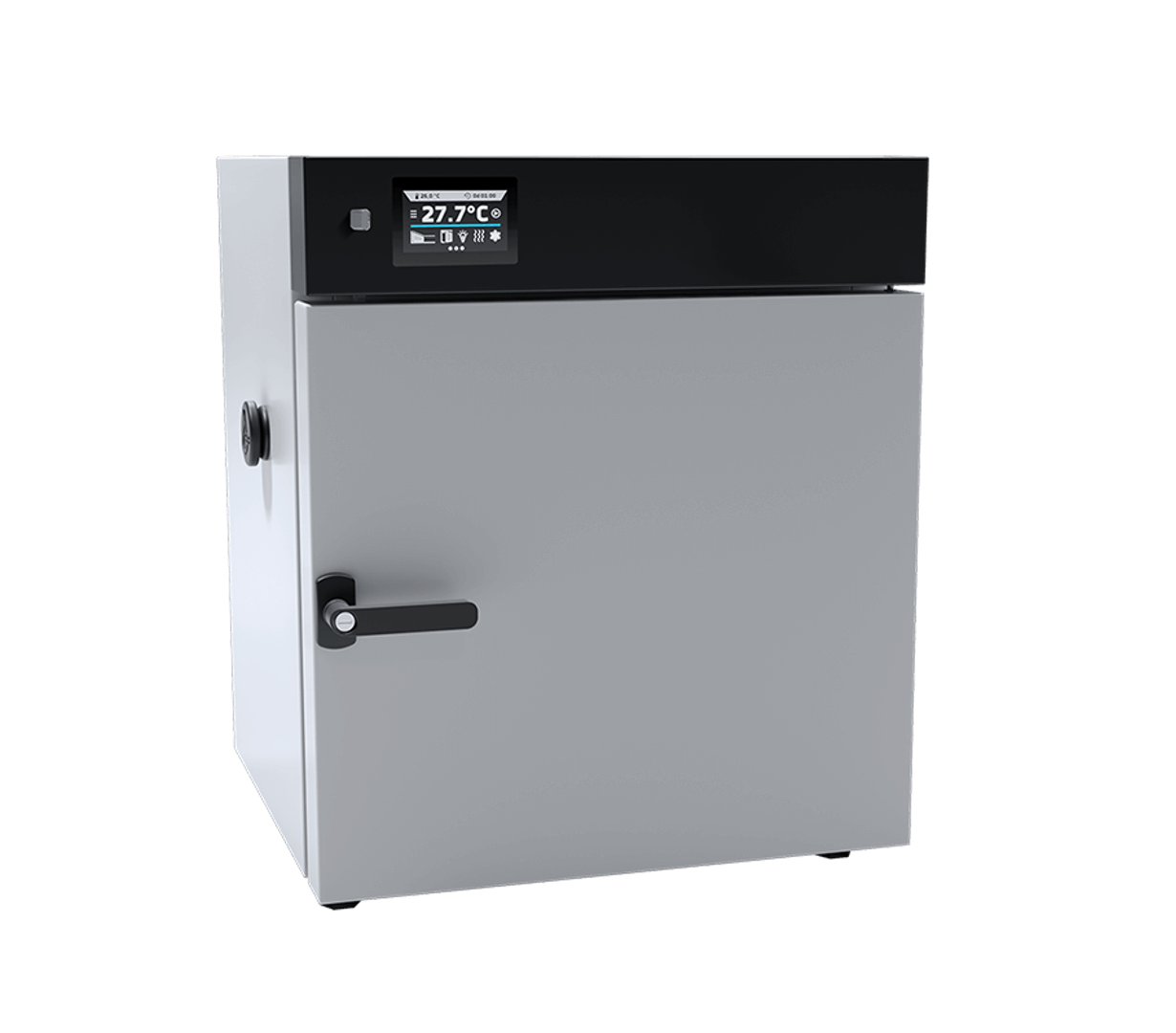
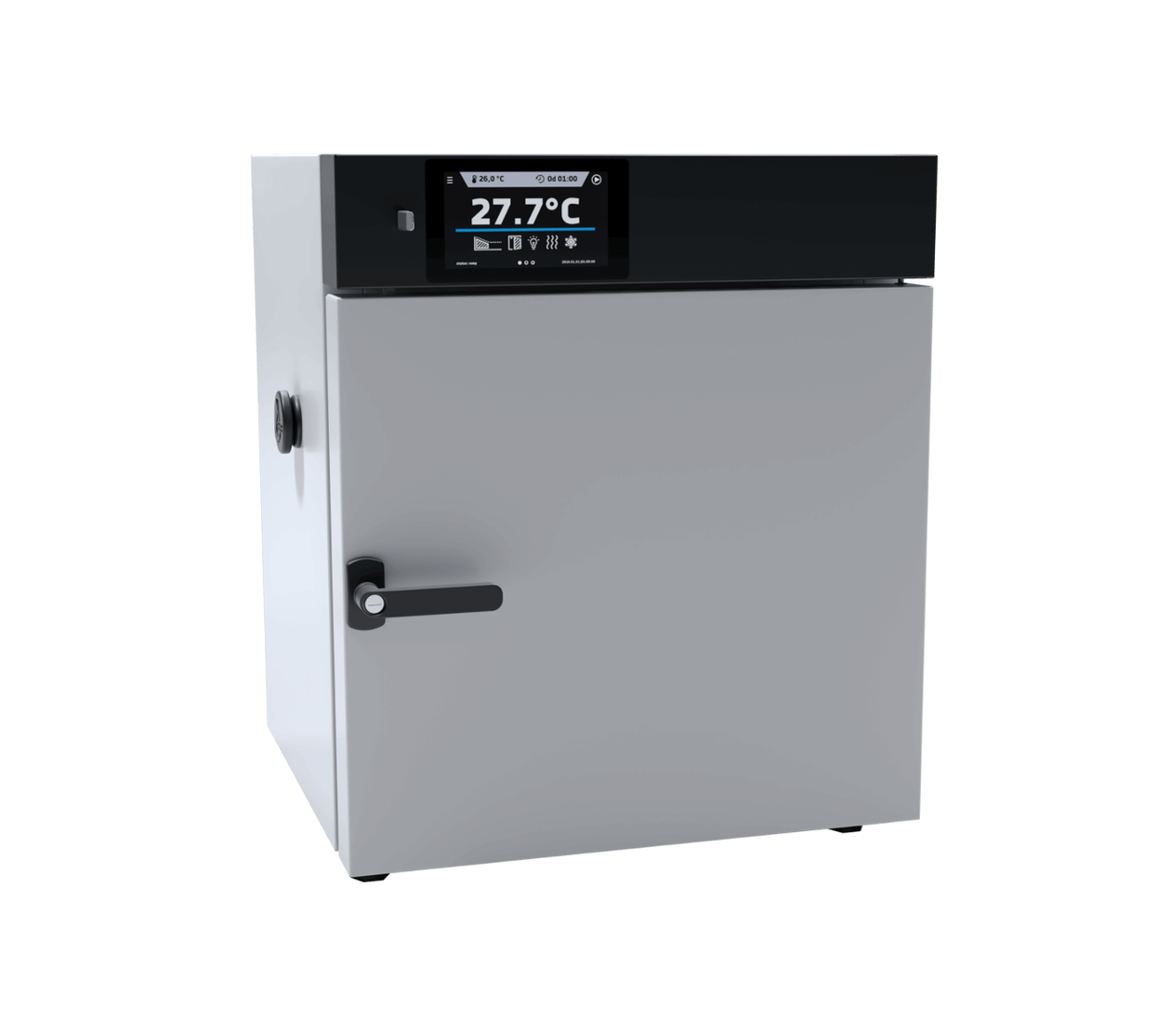
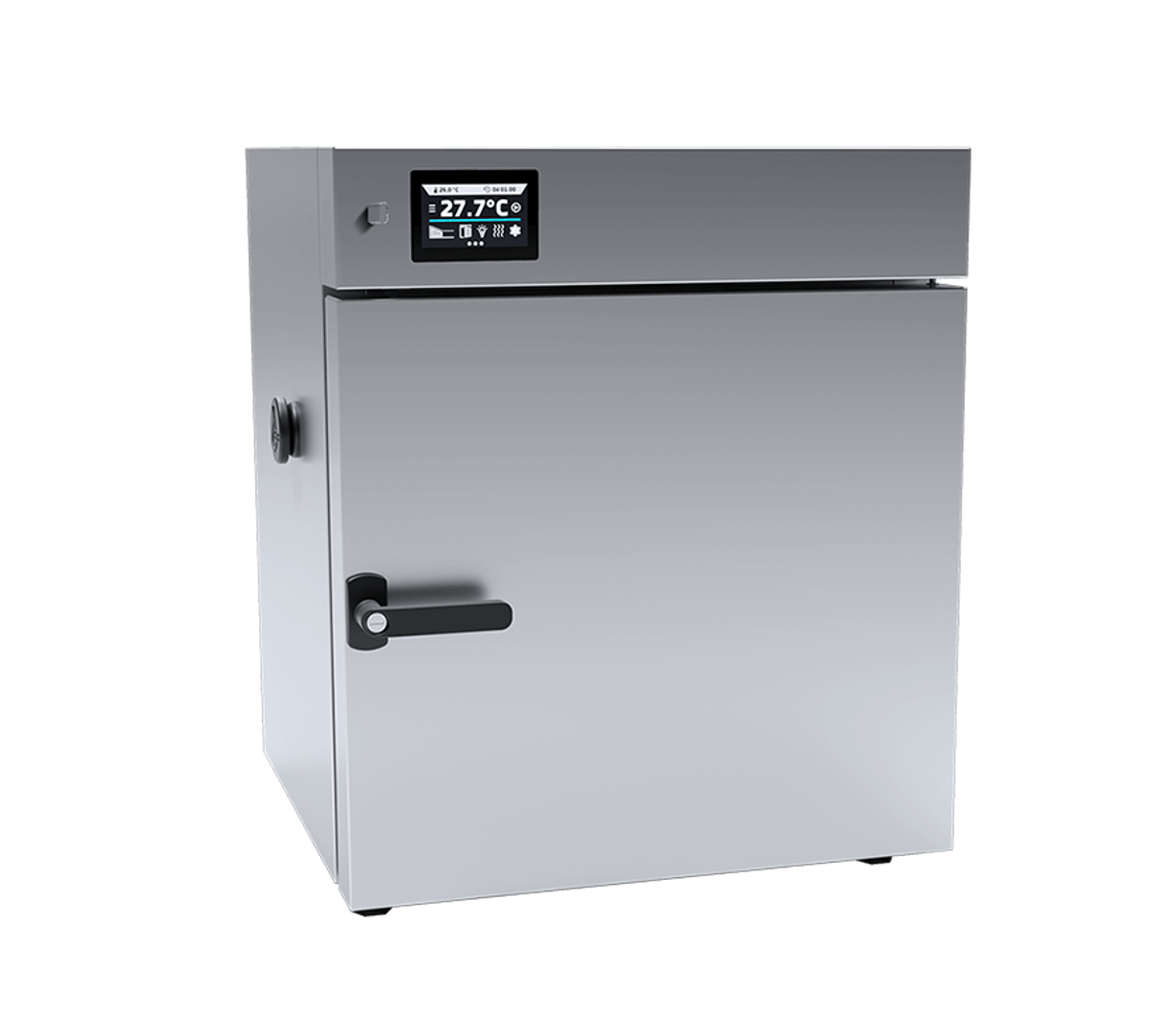
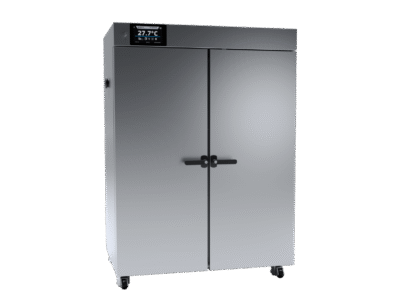
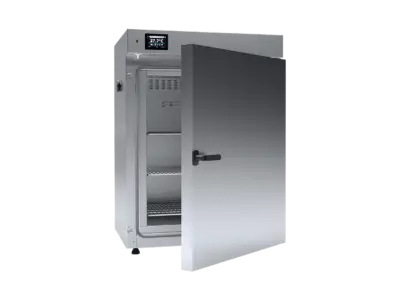
POL-EKO Pass-Through Drying Oven SLWN 53 The SLWN 53 is a specialized 56-liter pass-through laboratory oven designed for material transfer between separate laboratory zones. Equipped with doors on both the front and back, it utilizes forced air convection to provide rapid drying and superior temperature uniformity from ambient +5?C to +300?C. Managed by the Smart or Smart PRO controller, it features an electronic door interlock system to prevent both doors from being opened simultaneously, ensuring the integrity of cleanroom environments while providing precise thermal treatment.
The SLWN 53 is a unique solution for laboratories and production facilities that require a “bridge” between two distinct areas, such as a preparation room and a cleanroom. With its 56-liter capacity, it provides a controlled thermal environment for drying or heating samples as they transition through the facility wall.1Contamination Control & Interlock System:The defining feature of the SLWN series is the double-door configuration. To maintain the pressure differential and cleanliness of the laboratory zones, the SLWN 53 features an electronic interlock:When one door is opened, the door on the opposite side remains locked.This prevents a direct air path between the two rooms, protecting the clean zone from contamination.High-Performance Airflow:Despite its pass-through design, the unit functions as a high-end drying oven. The Forced Air (W) system uses a fan to circulate air throughout the chamber, ensuring that temperature variation remains minimal ($pm$ 2.0?C). This is critical for ensuring that samples are heated or dried evenly, regardless of their position relative to the two doors.Smart Control & Documentation:The SLWN 53 is equipped with the Smart or Smart PRO controller, allowing for:Segmented Programming: Setting specific time and temperature profiles for the transfer process.Data Logging: Recording every heating cycle and door opening event, which is vital for GMP/GLP-compliant facilities.Visual Alerts: The “Alarm Bar” provides clear status updates to technicians on both sides of the wall.Primary Applications:Cleanroom Transfers: Moving sterilized or dried glassware from a wash area into a clean assembly area.Pharmaceutical Production: Thermal processing of components moving between different clean-class zones.Electronics Manufacturing: De-binding or curing components in a controlled, pass-through environment.
Specifications
POL-EKO SLWN 53 Drying Oven Specifications
The SLWN 53 is a specialized 56-liter laboratory oven that combines forced air convection with a nitrogen blow system.It is specifically designed for drying and heat treatment in an inert atmosphere to prevent sample oxidation, frequently used for electronic components and following ISO 589:2003 standards for moisture determination in coal.
Air Convection: Forced (Fan-assisted)
Nitrogen System: Integrated dry nitrogen blow (includes connections and valves)
Chamber Capacity: 56 Liters
Working Capacity: 56 Liters
Temperature Range: +5°C above ambient to +300°C
Temperature Resolution: 0.1°C
Temperature Fluctuation at 105°C: ±0.2°C
Temperature Variation at 105°C: ±2.0°C
Controller: Microprocessor PID (Smart or Smart PRO)
Connectivity: LAN and USB ports (Wi-Fi standard on Smart PRO)
Nominal Power: 1700 W
Voltage: 230V, 50/60 Hz
Weight: 50 kg
Nitrogen System Options
This model is typically available in two distinct configurations:
SLWN1 53: Includes a laboratory rotameter that can be officially calibrated for precise gas flow monitoring.
SLWN2 53: Includes a technical rotameter for standard applications where formal flow calibration is not required.
Key Features
Oxidation Prevention: By purging the chamber with nitrogen, the oven replaces oxygen with an inert gas, which is vital for protecting sensitive electronic parts or chemical samples at high temperatures.
ISO 589 Compliance: Meets the requirement for drying samples at 105°C–110°C with a nitrogen flow rate of approximately 15 times the chamber capacity per hour.
Smart Controller Utility: Features an internal memory for data logging, event registry (e.g., door openings), and multi-segment time/temperature programming.
Safety & Access: Includes an open-door alarm, a physical door lock, and a standard Ø30 mm access port on the left side for external sensor validation.